

Choosing between Signal and Telegram directly impacts your privacy, scalability, and automation options. The two platforms are built on fundamentally different architectures and priorities.
Signal is designed for maximum end-to-end encryption and minimal data retention. Telegram is designed for large communities, cloud access, bots, and monetization features.
This comparison breaks down security, group limits, bots, compliance risks, and scalability so you can choose the right platform based on clear operational requirements.
Overview of Platforms
Signal
Signal is a privacy-focused messaging application developed by the nonprofit Signal Foundation. All personal and group communications are end-to-end encrypted by default using the Signal Protocol.

Core use cases include private one-to-one messaging, secure voice and video calls, and small encrypted group communication.
Telegram
Telegram is a cloud-based messaging platform that combines messaging, large-scale communities, bots, and broadcasting tools. Standard chats are stored in Telegram’s cloud and synced across devices.

Core use cases include public and private communities, large broadcast channels, automation through bots, and scalable group management.
Privacy & Security
Signal
Signal enables end-to-end encryption (E2EE) by default for all one-to-one chats, group messages, voice calls, and video calls using the Signal Protocol.
The platform retains minimal metadata and does not store message content on its servers. Communication data is designed to remain accessible only to participants.
Signal’s client and server code are open source, allowing independent review of its encryption implementation and security architecture.
Telegram
Telegram provides end-to-end encryption only in optional “Secret Chats.” Standard private chats, groups, and channels use client-server encryption and are stored in Telegram’s cloud.
Messages are synced across devices through Telegram’s cloud infrastructure, enabling multi-device access without requiring a primary device connection.
Telegram offers two-step verification, login activity monitoring, and privacy controls for phone number visibility and contact discovery.
Actionable Takeaway
Choose Signal if maximum privacy, minimal metadata retention, and default end-to-end encryption are required.
Choose Telegram if you require scalable community features and multi-device cloud access and can accept that standard chats are not end-to-end encrypted by default.
Community & Group Features
Signal
Signal supports encrypted group chats with end-to-end encryption enabled by default.
Group size and discovery are limited compared to large-scale community platforms, making Signal more suitable for private teams, internal coordination, or small trusted groups.
Telegram
Telegram supports groups with up to 200,000 members and offers granular admin permissions, moderation tools, and anti-spam controls.
Public channels allow one-to-many broadcasting and can be accessed via web links, making content visible without requiring users to install the app first.
Large groups support topics (threaded discussions), enabling structured conversations inside high-volume communities.
Actionable Takeaway
Telegram is significantly better for building large communities, managing high member counts, and broadcasting structured updates.
If your priority is small, private, encrypted peer groups without public discovery, Signal is sufficient.
Telegram also includes advanced business and monetization capabilities, which are covered in the next section.
Bots, Automation & Integrations
Signal
Signal is designed for private communication and does not provide an official bot ecosystem comparable to Telegram. There is no native bot marketplace or large-scale automation framework inside the app.
Signal also does not offer a public Bot API for subscription management, automated access control, or in-chat payment workflows.
Telegram
Telegram provides a full Bot API that enables automation, moderation systems, payment processing, and interactive mini-apps within chats, groups, and channels.
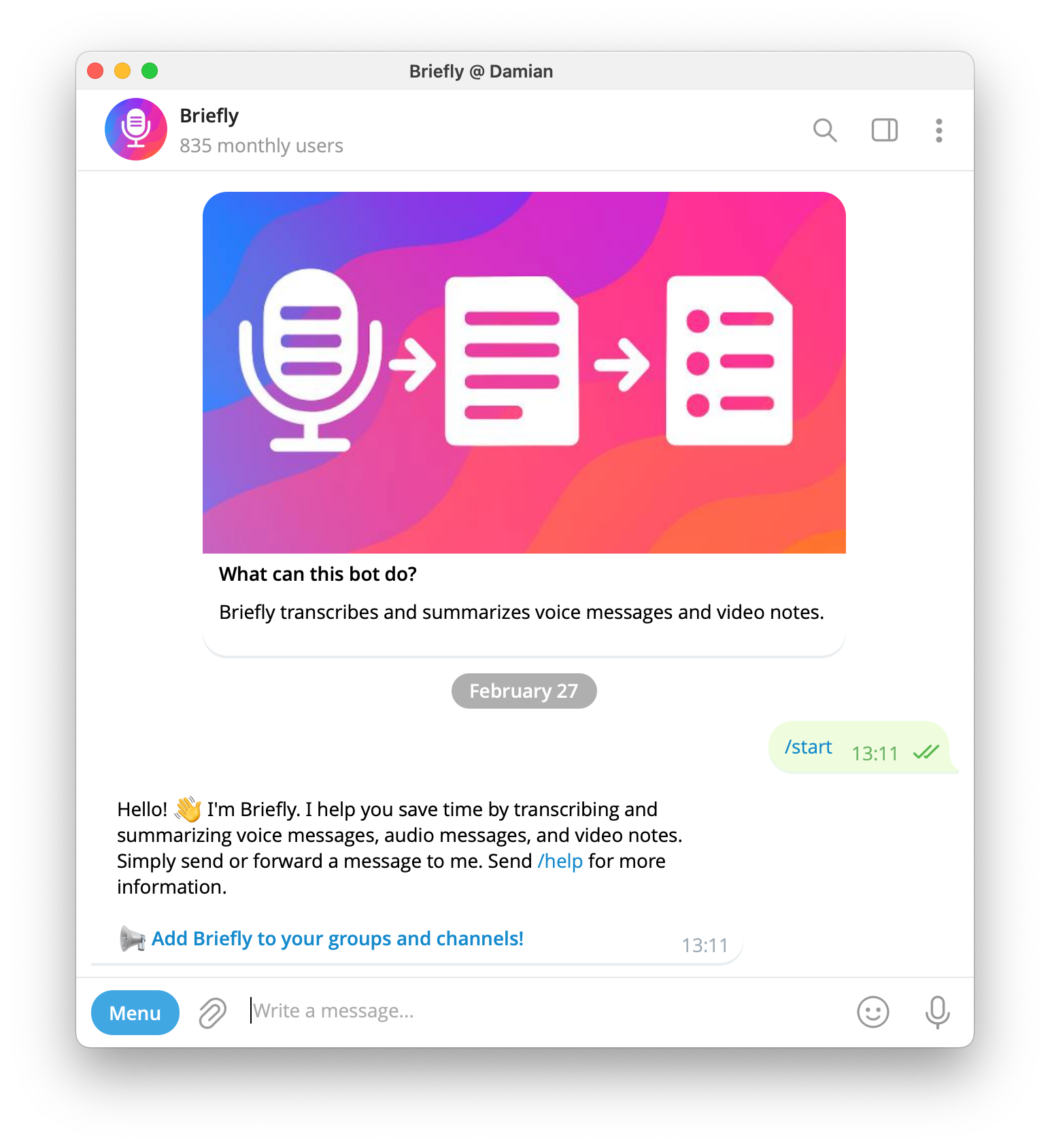
Bots can control member access, remove expired users, deliver gated content, process subscription payments, automate renewals, and manage structured community workflows directly inside Telegram.
Platforms like InviteMember operate on top of Telegram’s Bot API to enable paid memberships, automated onboarding, subscription billing, and access control without requiring external portals.
Actionable Takeaway
If you plan to run a paid community, automate member management, or scale subscription-based access, Telegram provides the required infrastructure.
Signal does not support automated subscription or gated community models at scale.
UX, Device Support & Sync
Signal
Signal offers mobile and desktop applications with a security-first architecture. Messages are encrypted by default and tied to linked devices rather than a fully cloud-synced account model.
Multi-device support exists, but session management and message history depend on device pairing and active device authorization.
Telegram
Telegram is available on mobile, desktop, and web, with cloud-based message storage for standard chats. Conversations sync instantly across all authorized devices.
Users can log in from multiple devices simultaneously and access full chat history without requiring a primary device to remain online.
Actionable Takeaway
Telegram provides greater operational flexibility for community operators who need seamless multi-device access.
Signal is preferable when minimizing reliance on centralized cloud message storage is a priority.
For Telegram-based communities, tools like SUCH improve support workflows by centralizing user messages in a web inbox, enabling support teams to handle conversations via the SUCH web app and team workflows, while replying to users from the membership bot.
Final Decision Framework & Operational Conclusion
Signal and Telegram serve fundamentally different purposes.
Signal is optimized for private, encrypted communication with minimal metadata exposure. It is suitable for individuals, internal teams, or small trusted groups where privacy is the primary requirement and scalability is not a priority.
Telegram is optimized for scale. It supports large communities, public channels, automation via bots, subscription management, and multi-device cloud access. It enables structured moderation, content broadcasting, and paid membership models.
For operators building monetized communities, Telegram provides the necessary infrastructure. Platforms like InviteMember enable subscription billing and automated access control, while SUCH enables structured support workflows and team-based message handling on top of Telegram.
Practical Selection Criteria
Choose Signal if:
- End-to-end encryption by default is non-negotiable.
- You operate small private groups.
- You do not require automation, subscriptions, or scaling.
Choose Telegram if:
- You plan to build or scale a community.
- You require bots, payments, or gated access.
- You need cloud sync and multi-device management.
- You intend to monetize memberships or content.
The correct choice depends on operational goals. Privacy-first communication favors Signal. Scalable, monetized community infrastructure requires Telegram.

