

Choose a subscription business model that solves a problem people face again and again. Instead of making a single sale, give customers a useful reason to pay for another month.
That reason could be fresh information, access to a helpful group, regular practice, or ongoing expert feedback. The right choice depends on what your audience needs and how much time you can spend serving it.
These seven subscription business model examples show what you can sell, how to deliver it, and when each model is a good fit.
Seven subscription business models at a glance
| Model | What members pay for | Example monthly sales |
|---|---|---|
| Premium briefings | Fresh expert analysis | 100 × $10 = $1,000 |
| Resource library | New and updated resources | 80 × $15 = $1,200 |
| Peer community | Useful connections and discussions | 60 × $20 = $1,200 |
| Practice club | Structured learning and accountability | 40 × $15 = $600 |
| Group coaching | Regular access to expert guidance | 20 × $50 = $1,000 |
| Personal reviews | Limited individual feedback | 15 × $60 = $900 |
| Opportunity digest | A regular shortlist of relevant opportunities | 100 × $12 = $1,200 |
These figures are hypothetical gross monthly sales in USD. They assume every listed member pays that month, before costs, refunds, and taxes. They are not forecasts or recommended prices.
1. Sell premium briefings
An expert briefing helps people understand what is happening in a field without spending hours researching it themselves.
For example, a freelance designer could publish a weekly breakdown of design trends, new tools, and real project decisions. Subscribers pay for the expert's judgment, not just a list of news headlines.
Recurring offer: One detailed briefing every week, plus a monthly recap.
Why members renew: New information changes the decisions they need to make.
Telegram setup: Deliver the briefings through a private channel. Add a group for questions only if discussion is part of your offer.
This model can serve many people with the same work. It is a good fit if you already research the topic regularly. Avoid it if you cannot bring a fresh perspective every week.
2. Build a resource library that keeps growing
A resource library can save members time on tasks they repeat. Think lesson plans for teachers, business templates for freelancers, or new editing presets for photographers.
The difference between a library subscription and a one-time download is what happens after the first month.
Recurring offer: A useful starting collection, two new resources each month, and updates to older materials when needed.
Why members renew: Their work changes, and new resources help them solve new tasks.
Telegram setup: Use a private channel with a pinned index of resources. Organize materials into categories so members can find what they need.
The main cost is creating and maintaining the collection. If your customers can download everything on day one and never need anything else, sell it as a one-time product instead.
3. Run a paid peer community
A peer community brings people with similar goals together. Members pay for a useful network, shared experience, and well-organized discussions.
For example, a group for independent translators could host weekly conversations about client work, common problems, and business decisions. Members can learn from people facing similar challenges.
Recurring offer: A moderated discussion space, a weekly discussion prompt, and regular member introductions.
Why members renew: The group helps them solve problems, find relevant contacts, and stay connected.
Telegram setup: Use a private group for discussion and a channel for important updates.
The creator's job is to make the group useful even when they are not answering every question. Start with a small, focused audience. An empty group or one full of unrelated posts offers little reason to renew.
4. Start a practice club
A practice club helps people build a skill over time. Unlike a course with a fixed end date, the club gives members ongoing reasons to practice.
A language teacher, for instance, could run a weekly speaking challenge for learners who already know the basics but struggle to practice regularly.
Recurring offer: Weekly exercises, group challenges, and a monthly progress check.
Why members renew: They want structure, feedback from peers, and a reason to keep practicing.
Telegram setup: Publish exercises in a private channel and use a private group for submissions and discussion.
Choose a skill that benefits from repeated practice. If the whole program ends after four weeks with no continuing goal, a fixed-price course may be more appropriate.
5. Offer group coaching
Group coaching gives several members access to your expertise at the same time. It works well when many customers have similar questions but need more guidance than written content can provide.
A career coach could host two monthly group sessions for freelancers who want to improve how they find and manage clients.
Recurring offer: Two scheduled group calls per month, follow-up notes, and a shared question space.
Why members renew: They keep getting new questions as they put advice into practice.
Telegram setup: Use a private group for questions and session information. Provide the scheduled calls as part of the membership.
Keep the group small enough for the format you promise. If every customer expects their own private session, this is no longer a group coaching offer.
6. Provide limited personal reviews
Some customers need feedback on their own work, not a general answer.
A writing coach could offer subscribers one review of a short article every month. That review helps them improve a piece of work they actually want to publish.
Recurring offer: One review per month, up to a stated length, with a clear response time.
Why members renew: Members have new work to improve each month.
Telegram setup: Use private messages for individual work and a shared channel for general updates. Add personal reviews as a manual membership benefit in InviteMember.
You deliver the reviews yourself. The membership system does not complete them for you.
This model has a clear capacity limit. Fifteen members receiving a 30-minute review each require 7.5 hours of review work every month, before messages and administration. Set a limit on the number of members you can serve.
7. Curate a paid opportunity digest
People often pay to find the right opportunities faster. A carefully filtered list can be valuable when the information is scattered across many sources.
For example, a creator who knows the publishing industry could send writers a regular list of open submission calls, grants, and relevant paid assignments.
Recurring offer: A weekly list with eligibility, deadlines, and a short explanation of who each opportunity suits.
Why members renew: New opportunities appear, and old ones expire.
Telegram setup: Publish the shortlist in a private channel. Include dates so members know which items are still useful.
Unlike an expert briefing, the main benefit here is finding and filtering opportunities rather than interpreting news. Check the details regularly and never promise that members will win an award or get a job.
Choose the subscription model you can keep delivering
Start with one recurring need and one clear offer. Before you launch, answer these questions:
- What problem will my members still have next month?
- What exactly will they receive in a typical month?
- How much time will it take me to deliver it to ten members? What about 100?
- Have people paid for a similar solution or asked me for this help?
- What would make a paying member decide not to renew?
If you need inspiration for specific audiences, explore these real subscription business ideas.
Test your chosen model with a small paid pilot. Tell buyers what the first month includes, when you will deliver it, and what happens at renewal. Ask what they used and why they would or would not pay again.
Interest from free followers is useful, but repeat payments are stronger evidence that you have a sustainable offer.
How to start a subscription business through Telegram
Once you have chosen your model, you need somewhere to deliver it and a way to handle payments and access.
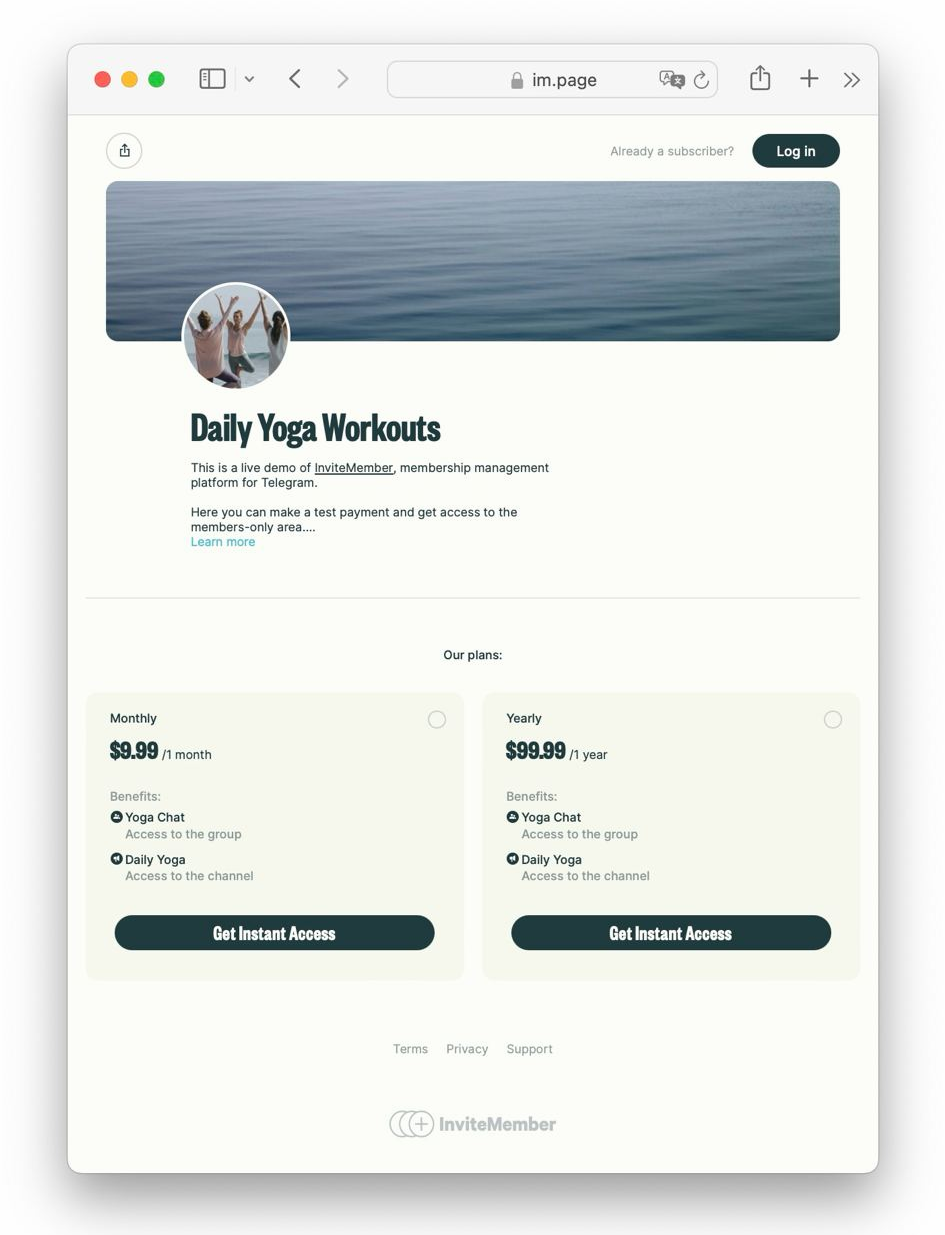
InviteMember lets you set up a membership page and an optional Telegram membership bot without coding. You can connect private Telegram channels and groups to paid plans and include benefits you deliver yourself.
- In your project dashboard, open Settings > Resources and select Add new +. Connect the private channels or groups your members will use. Select Manual for any personal service you deliver yourself.
- Open Settings > Payment options and connect the payment methods you want to accept. For digital goods and services sold inside your membership bot, use Telegram Stars. For other supported payment methods, use your separate membership page.
- Open Settings > Subscription plans and select Add New Plan +. Set the price, currency, billing period, and included resources. Enable recurring billing if the plan should renew automatically. Automatic renewal requires a compatible payment method. Plans priced in Stars are available through the membership bot, not the page.
- Share your membership page, membership bot, or direct plan link to sell access to a private Telegram group or channel. Select Page below your project name in the dashboard to open the membership page and copy its im.page address. For Stars-priced plans, share your membership bot instead. Members must use the join buttons provided through their membership after payment.
- Test your offer with another account before launch. Check that customers can pay and use the join buttons to access the right private resources. Check that access ends when their membership expires.
The subscription plan creation guide covers plan options. Follow the project testing guide before you launch.
Keep billing and access separate from private support questions. A dedicated support bot can give members a place to ask for help without filling the paid group with individual account issues. See how to organize a Telegram storefront and support bot.
FAQ
What is the easiest subscription business model to start alone?
A premium channel or curated digest can be a practical starting point if you already have the knowledge and a paying audience. You create one set of content for everyone. Personal coaching and reviews require more time for each additional member.
Are subscription businesses profitable?
They can be, but recurring revenue does not guarantee profit. Your member payments must cover content creation, personal delivery, payment costs, marketing, and other expenses. Test demand and measure renewals before investing in a larger operation.
Can I combine several subscription business models?
Yes. For example, a resource library can include a peer group, or a practice club can offer personal reviews in a higher tier. Start with the simplest offer that solves a real problem. Add more benefits only when you know customers need them and you can deliver them consistently.
Build for the second month
Choose a subscription business model based on what people will need next month, not just what they want today. Make a clear promise, deliver it on schedule, and test whether members renew. A sustainable offer is one that customers want to keep paying for and that you can keep delivering.

