

Membership and subscription are often used for the same paid offer. The useful difference is not the word itself. It is what the customer expects after paying.
A subscription promises continued delivery or access on a repeating payment. A membership promises defined benefits and member access. A monthly paid community can be both: the subscription is how it renews, and the membership is what the person receives.
Choose the promise first. Then make the payment and access rules match it.
Membership vs subscription at a glance
| If you are selling | What the customer expects | A clear way to describe it |
|---|---|---|
| Regular premium content | New content or continued access every billing period | A monthly content subscription |
| A private community, calls, feedback, or member benefits | Access to the stated benefits and a clear member experience | A paid membership |
| Content plus discussion or events | Both regular delivery and member access | A recurring membership with content and community benefits |
| A fixed workshop, cohort, or short pass | Access for the stated period, without an ongoing promise | A one-time plan |
The labels can overlap. Do not call a private feed a community if members only receive posts. Do not call a one-off workshop a subscription unless it renews. Clear wording prevents the wrong expectation before somebody pays.
Start with what you will deliver
Before you create the plan, list the benefits that members will actually receive. Use that list in the project description and plan description, then connect only the resources that deliver those benefits.
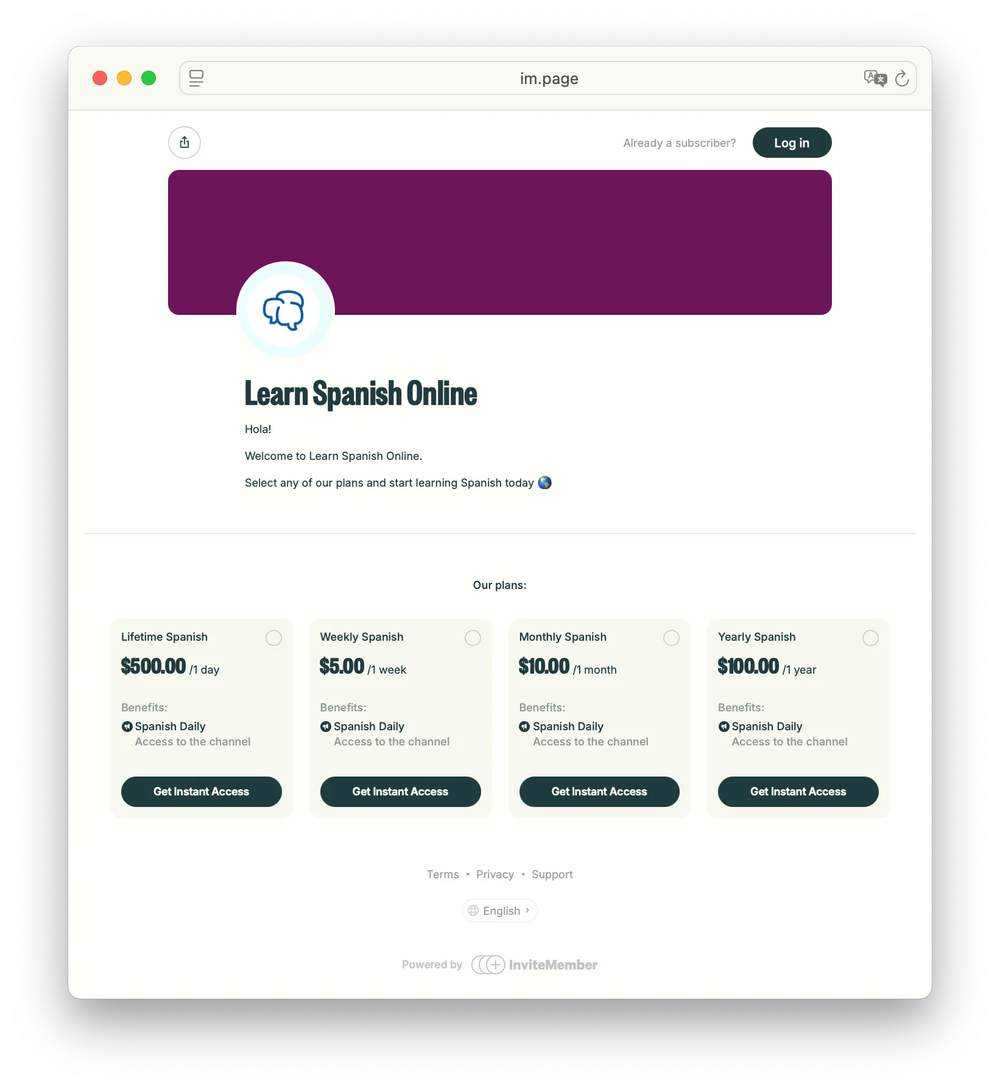
For example:
- A research creator might offer a private Telegram channel with new notes every weekday.
- A coach might offer a private Telegram group, one group call each month, and written feedback.
- A creator with a Discord server might offer premium forum access, live voice sessions, and a resource library.
The first example is usually a content subscription. The second and third are memberships because access, participation, or support is part of what people buy. All three can use recurring payments when the value continues each month.
Choose the model that matches the work
Choose a content subscription for regular delivery
Use a content subscription when your main job is to publish something useful on a reliable schedule. The customer does not need to interact with other members for the offer to work.
This fits premium posts, lessons, reports, alerts, files, newsletters, and private broadcast channels. A private Telegram channel is a practical choice when members mainly need to read what you publish.
The plan should say what is delivered and how often. For example: "Weekly market report, new analysis every Monday." Do not promise personal feedback, calls, or a member community unless those are part of the plan.
Choose a membership for access and participation
Use a membership when the value comes from entering a private space or receiving member benefits. That can include discussion, coaching, feedback, events, networking, or a member-only resource library.
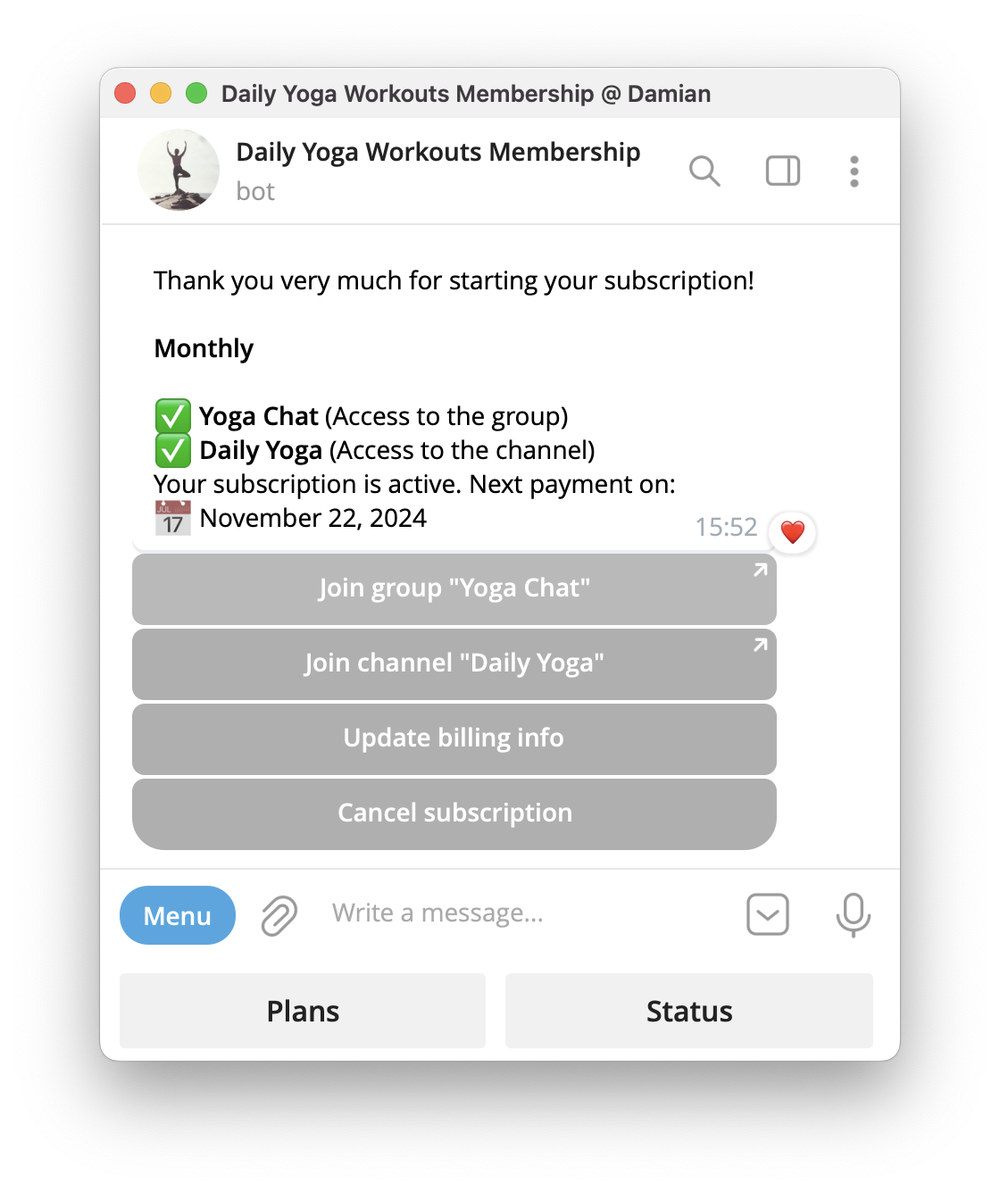
Members need to know where to start, what is included, and how to get help. A private Telegram group can fit ongoing discussion. A Discord role can unlock premium channels, forums, or voice spaces. A membership can still include content, but content is not the only reason to stay.
Be realistic about the work. A membership with calls, feedback, or discussion needs time for hosting, moderation, and support. Keep the first version small enough to run well.
Use both when each part has a clear job
Many creator offers combine the two models. A private Telegram channel can deliver the weekly material, while a group gives members a place to discuss it. A Discord role can unlock both a premium forum and a live-event channel.
In that case, describe both parts. For example: "Monthly membership with weekly lessons in the private channel, member discussion in the group, and one live question session." The recurring payment supports the ongoing benefits; the membership describes the access members receive.
Use a one-time plan when the offer has a fixed end
Not every paid offer should renew. Use a one-time plan for a workshop, short program, event, limited pass, or fixed cohort. State the end date or access period clearly.
A one-time plan can still include a private community during the program. What matters is that the customer understands when access ends and what is included. Do not use a recurring plan merely because the offer has a private group.
Turn the offer into a clear plan
Once you know what you are selling, make the project and plan match it.
- Write the project description for the overall offer. Explain who it is for and what members can expect.
- Create the Telegram channel, Telegram group, Discord role, or manual benefit that delivers each promised benefit.
- In InviteMember, open Settings > Resources and connect those resources to the project.
- Open Settings > Subscription Plans and click Add New Plan +. Set the plan name, price, currency, billing period, included resources, and access settings.
- Write the plan description with the payment period and the benefits that this plan includes.
For a recurring content subscription, the plan might include one private Telegram channel. For a paid membership, it might include a channel, a discussion group, and a manual benefit for a monthly call. For a one-time workshop, it might include the group and files for the stated program period.
InviteMember can connect plans to Telegram channels, Telegram groups, Discord roles, and manual benefits. Its subscription-plan guide explains the available plan fields, and the paid-community guide shows the full project setup path.
Make payment and access terms easy to see
The payment type must match the promise:
- For a recurring plan, show the price and billing period before checkout. Explain what continues each period and what happens when the subscription is canceled.
- For a one-time plan, show the price and the exact access period or end date.
- For a free plan, explain what is free and what the paid plan adds.
Do not hide important access limits inside a long description. A person should be able to see the plan price, period, and included benefits before activating it.
Start with one plan, then add a real alternative
One good first plan is easier to explain, test, and support than several nearly identical tiers. Add another plan only when it gives people a meaningful choice, such as a different access period, a genuinely different benefit, or a separate audience.
For example, do not make three monthly plans that all unlock the same community. A monthly plan and an annual plan can make sense when they include the same benefits but offer different payment periods. A separate coaching plan can make sense when it includes personal feedback that the standard plan does not.
You can later use trials, discounts, or access codes when they solve a specific part of the offer. The special-offers guide explains those options without making them the starting point.
FAQ
Is a membership always a subscription?
No. A membership can be free, paid once, or paid on a recurring schedule. A recurring membership uses subscription payments for continued access.
Is a subscription always a membership?
No. A private content feed can be a subscription without a discussion space or member participation. The customer still needs to know what they receive and how often.
Which model is better for a Telegram channel?
A private Telegram channel often fits a content subscription because it is made for publishing. Add a private group when discussion, feedback, or member connection is part of the paid offer.
Can a paid membership have a one-time payment?
Yes. A fixed program or event can give people member access for a stated period with a one-time plan. Use recurring billing only when the offer continues after that period.
Final answer
A subscription describes a repeating payment and continued delivery or access. A membership describes the benefits and access a person receives. Start with the real benefit, choose the payment type that matches it, and make the project and plan say the same thing.

